
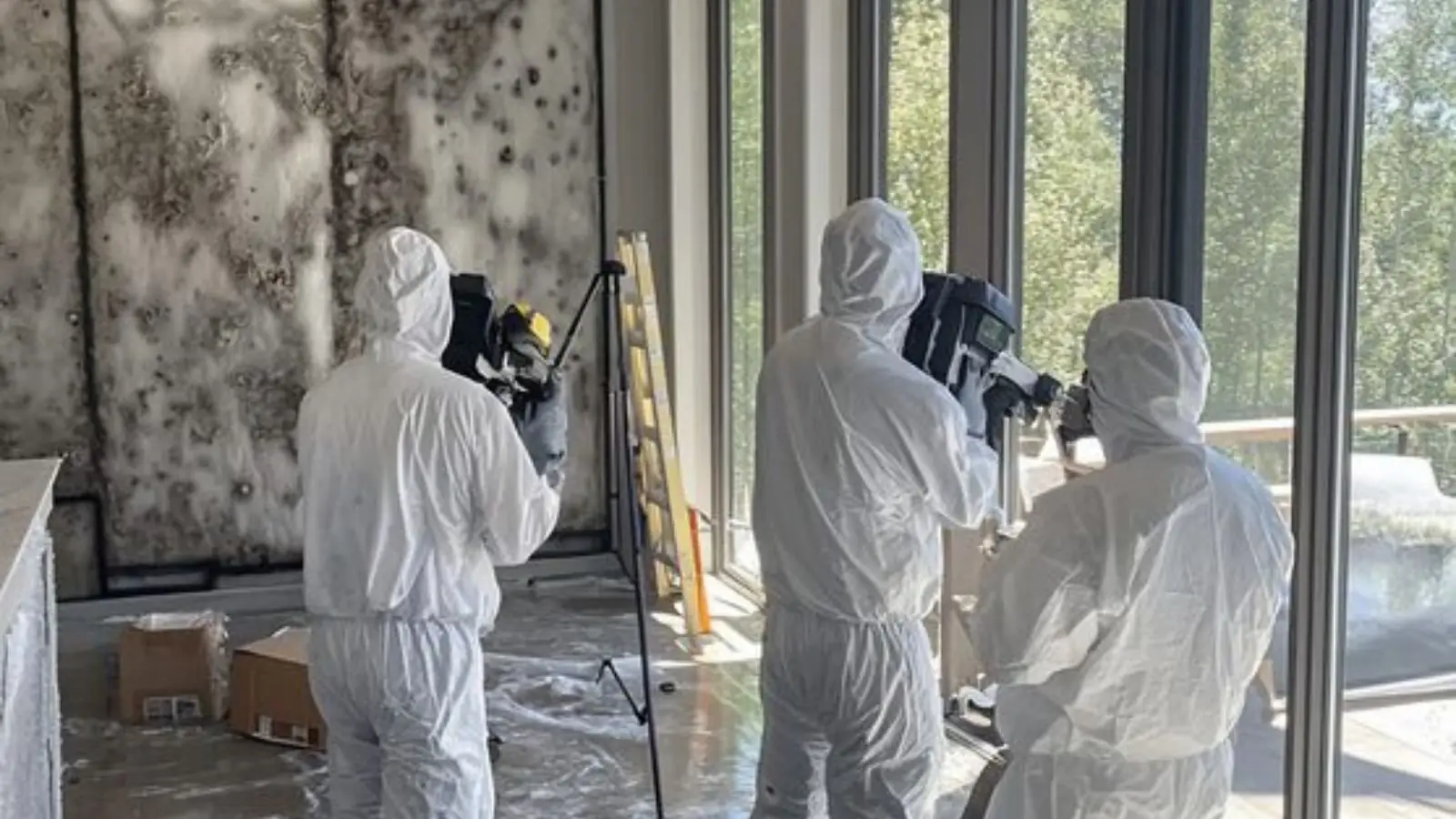
Mold remediation is the process of finding the moisture behind mold, containing the affected area, removing or cleaning contaminated materials and confirming the work is complete. In West Hollywood, CA, it usually follows a leak from a pipe, a roof, an air conditioner line or a bathroom.
It differs from cleaning because it adds controls to keep spores from spreading to the rest of the home. This guide walks through each phase, the industry standard behind it and the verified California facts worth checking before you sign a contract.
The steps, in order
| Phase | What happens | Why it matters |
|---|---|---|
| Assessment | Moisture meters and thermal imaging locate wet materials and the source | Without the source, the mold returns to the same spot |
| Containment | Plastic barriers seal the work area | Limits spread to clean rooms |
| Negative air | A HEPA-filtered machine pulls air out of the work area | Keeps loosened particles from leaking out |
| Removal | Porous materials with growth are bagged and discarded | Porous materials are hard to clean once colonized |
| Cleaning | Hard surfaces are HEPA vacuumed and cleaned | Takes off residue from surfaces that stay |
| Drying | Air movers and dehumidifiers dry the structure | Mold needs moisture to grow |
| Verification | Visual checks and moisture readings, sometimes sampling | Confirms the work met its goal before rebuild |
Exact phases vary with the size and location of the growth. A written scope should list the ones that apply to your job.
Find the moisture first
No remediation plan is complete without the water source. A crew checks plumbing, rooflines, windows, ventilation and condensation points, because removing mold while a leak continues just resets the clock.
If the cause was a sudden pipe or appliance failure, the structure may also need water mitigation drying. That phase can run before, during or after the mold work depending on the damage.
Containment and negative air
Containment is the part that separates remediation from wiping a wall. Plastic sheeting seals doorways and vents, and a negative air machine with a HEPA filter keeps the work area at slightly lower pressure than the rest of the home.
The goal is to stop dust and spores from traveling on foot traffic or air currents. Crews also bag debris inside the containment before carrying it out.
When remediation is not needed
Not every dark patch calls for containment. A small area on a hard, nonporous surface, such as tile or a sealed shower wall, can often be cleaned by an owner following the EPA size guideline of about 10 square feet.
Remediation makes sense when growth is larger, when it sits inside a wall or ceiling cavity, when porous materials are involved or when the water event was big enough to soak insulation and drywall. A crew assessment can sort out which case you have, and it should explain the reasoning in plain words.
Honest limits matter here. Remediation does not repair plumbing, replace a roof or waterproof a foundation, so expect other trades to be involved when the source is a failed fixture or a leaking building envelope.
Need a remediation scope?
Call the 24/7 line to describe the growth and the moisture source. A crew can explain how a written scope is built.
The published standard
ANSI/IICRC S520 is the published standard for professional mold remediation. It sets out principles for assessing conditions, containment, removal and verification.
Ask any company whether its crews work to it, and ask how the written scope reflects it. A confident answer should refer to specific steps, not slogans.
Drying and verification
Mold needs moisture, so drying is not optional. Air movers and dehumidifiers bring materials back to normal readings, and a crew records those readings so the result is documented rather than assumed.
Verification can include a visual check, moisture readings and, in some cases, surface sampling by professionals. The EPA says surface sampling may help confirm an area was adequately cleaned.
Removal and rebuild
Once the area is cleared, rebuilding begins with new drywall, insulation, trim and paint. Because rebuild is a separate trade, water damage repair is usually priced and scheduled apart from the mold work itself.
Hiring rules to check in California
The Contractors State License Board says contractors on jobs totaling $1,000 or more in labor and materials must be licensed by CSLB. Verify any contractor at cslb.ca.gov, get a written contract, and do not pay more than 10 percent down or $1,000, whichever is less.
The Los Angeles County Department of Consumer and Business Affairs guide on hiring remediation contractors adds that mold or asbestos cleanup must follow EPA and Cal/OSHA rules for safe removal and disposal. It also lists what a written contract should contain, including the total price, payment schedule, scope of work, timeline and permits, and the contractor's license number.
Photograph and video the damage, report it to your insurer promptly, and ask whether the insurer needs to inspect before repairs begin. Never make a final payment until the work is complete.
Sources: California Contractors State License Board consumer guidance, and the Los Angeles County Department of Consumer and Business Affairs guide to hiring remediation and restoration contractors (July 2025)
What a good written scope includes
- The area and materials to be removed, described room by room.
- The containment and air filtration to be used.
- How the work will be dried and how readings will be recorded.
- How completion will be checked and who performs the check.
- The schedule, the permits if any, and the payment terms.
Homeowners just west of the city line can read how the same process applies on the Beverly Hills water damage page.
Common questions from West Hollywood readers
Is mold remediation the same as mold removal?
Removal is one phase. Remediation covers finding the moisture, containment, removal, cleaning, drying and verification, so the mold and its cause are both addressed.
Does homeowners insurance cover mold remediation?
It depends on the policy and the cause of the water. Sudden and accidental events are often treated differently from gradual leaks, so check your policy and ask your insurer before work starts.
How do I check a contractor's license in California?
Search the contractor at cslb.ca.gov. The Contractors State License Board says jobs totaling $1,000 or more in labor and materials require a license.
How much can a contractor ask for as a down payment?
The state board advises paying no more than 10 percent down or $1,000, whichever is less. Never let payments get ahead of the work.
Where do West Hollywood residents check remediation rules?
Start with the CSLB for contractor licensing and the Los Angeles County Department of Consumer and Business Affairs for hiring guidance. The city's Building and Safety division on the second floor of City Hall can answer permit questions for rebuild work.