
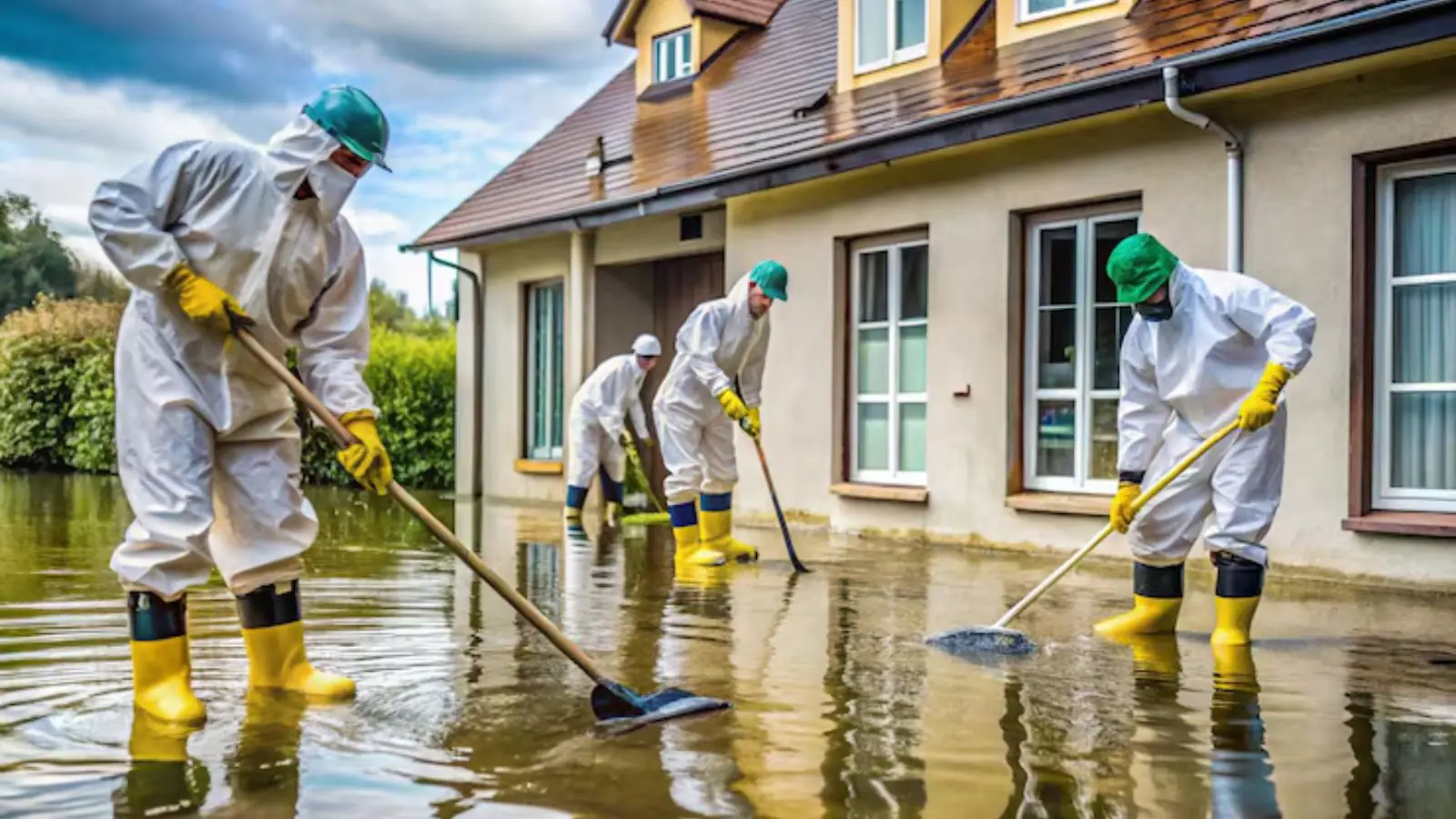
Flood damage restoration in West Hollywood, CA covers water that came from outside the plumbing you control or from a failure big enough to flood a whole level. That includes storm runoff, a broken public water main, an overflowing drain or sewer line and appliance failures that put an inch of water across every room. Flood water is often gray or black, which changes how it must be removed, cleaned and dried.
This is an emergency job and the 24/7 line is open at night and on weekends. Stay out of standing water if you cannot see the floor, because outlets, extension cords, chargers and appliances may be live. If water is near the panel or you smell gas, leave and call 911 or the utility before calling us.
When flood water is an emergency
Water above the floor
Anything deeper than a wet spot needs extraction. Flood water carries soil, bacteria and chemicals from the surfaces it crossed.
Sewage or a backed-up drain
Raw sewage is Category 3 water. Do not clean it with household tools, and keep children and pets out.
Water in a garage or lower level
Cars, chargers, storage and building equipment are usually in the water. Electrical risk comes before cleanup.
Water still entering the building
Find and stop the source if it is safe, or call the utility. Removal is pointless while water keeps coming in.
Category 3 sewage backup? Start here
People often describe this as raw sewage coming up a floor drain, a toilet that will not stop overflowing or a smell that filled the unit. Restoration pros call it Category 3 water cleanup, and the steps are different from clean-water drying.
Sewage backup cleanup
Sewage backups need protective gear, containment and removal of porous materials that the water touched, such as carpet, pad, insulation and low drywall. Hard surfaces are cleaned and disinfected, and the area is dried only after contaminated material is gone.
Stay out of the area, do not run water to flush the line and do not use a household vacuum. If the blockage is in the building drain, a plumber has to clear it first, and the cleanup follows. In multi-unit buildings, tell the property manager at once because the same line may serve other units.
Cleanup includes a documented record of what was removed. Ask your insurer early, since sewage backup coverage is often an add-on to a standard policy. After the water is out, water mitigation dries the structure.
Basement flooding cleanup: garages, crawl spaces and lower levels
True basements are uncommon in West Hollywood, so the lower spaces that flood are below-grade garages, storage rooms, utility rooms and crawl spaces. They flood from a main break, a drain backup, runoff or a failed sump or pump, and they are slow to dry because air does not move.
Cleanup starts with extraction using submersible pumps or truck-mounted units, followed by removal of wet storage, drywall and insulation, then drying with dehumidifiers sized for the space. Crawl space water, such as irrigation backflow reaching the area under a floor, is dried from below with directed air and monitored with readings.
A look at what flooding can do in West Hollywood
In 2026 a 36-inch LADWP water main broke beneath Sunset Boulevard at Holloway Drive. ABC7 Los Angeles reported about 17 million gallons into the streets and a closure of Sunset between Sherbourne Drive and San Vicente Boulevard for just over a week. NBC Los Angeles reported flooded garages, including subterranean parking filled nearly to the roofs of cars, and the cause was still under investigation.
The lesson for any building near the Sunset Strip is practical: lower garages and storage rooms collect water first, so photograph the level, avoid the space until electrical risk is cleared and call the 24/7 line.
How flood restoration proceeds
Make safe
Electrical and structural risks are checked, and the water source is stopped if it can be.
Extract
Pumps and extraction units remove standing water, then the floor is exposed.
Remove and clean
Porous, contaminated materials come out and hard surfaces are cleaned and sanitized.
Dry and document
Equipment dries the structure while readings and photos build the record.
| Source | Usual category | Why |
|---|---|---|
| Broken supply line or water main | Category 1 at the source, rising quickly | Starts clean but picks up soil, debris and chemicals as it spreads |
| Washing machine or dishwasher overflow | Category 2 | Discharge water carries detergent and soil |
| Storm runoff entering a garage | Category 2 or 3 | Crosses streets and landscaping before entering |
| Sewer or drain backup | Category 3 | Contains sewage and is grossly contaminated |
Categories are defined in ANSI/IICRC S500. A longer wet time can raise the category.
What affects the cost of flood restoration
- The water category, because gray and black water require removal and sanitizing steps.
- How deep the water got and how many square feet it reached.
- Materials involved, such as stored contents, carpet, drywall height and insulation.
- Pumping and drying time, including the number of dehumidifiers needed for a closed space.
- Rebuild scope after drying, which is scoped and priced separately.
Flood and insurance
The California Department of Insurance says homeowners and commercial policies typically exclude flood, mudslide and debris flow. Flood policies are sold through the National Flood Insurance Program and private insurers, and a standard policy takes effect 30 days after purchase. Ask your insurer how a broken pipe or sewage backup is treated, and keep photos and receipts either way.
Flood water in the building?
Call the 24/7 line. We explain safe first steps and what happens next.
What the city says about flood exposure
The City of West Hollywood reports that a FEMA Letter of Map Revision, earned after two decades of storm drain construction by the County of Los Angeles, means no parcels in the city must carry mandatory flood insurance. About 400 properties in the southwest part of the city had been required to carry it before the change.
Flood insurance is now optional, but optional is not the same as covered, so check the FEMA flood map for your address and ask your insurer what your policy excludes.
The city's 2023 hazard mitigation plan ranked flood last among twelve hazards in a workshop scoring, and it also notes that western areas were partly marsh before the 1920s and are susceptible to liquefaction in a severe earthquake. The same plan warns that shaking can break underground water lines and cause flooding. Pipe failure is therefore a more realistic flood source here than a river.
Sources: City of West Hollywood Flood Insurance Map Revision page and Local Hazard Mitigation Plan (2023), California Department of Insurance.
Flood damage questions from West Hollywood
Do you handle flood damage emergencies at night or on weekends in West Hollywood?
Yes. The dispatch line runs 24/7 and flood calls are treated as emergencies. A crew is sent when one is available, with no arrival time promised, and you are told what to do while you wait.
Is it safe to walk through flood water in a garage?
Not if you cannot see the floor or if electrical equipment, chargers or outlets are nearby. Stay out until power is confirmed safe and call 911 or the utility for any electrical or gas risk.
What is the difference between flood restoration and water removal?
Emergency water removal pumps out standing water quickly. Flood restoration includes that, plus removal of contaminated materials, sanitizing, drying and the rebuild plan.
Does restoration stop future flooding?
No. Restoration repairs and dries the damage. It is not waterproofing or drainage work, so a recurring leak needs a plumber, a waterproofing specialist or the property owner.
Should I clean up sewage myself?
No. Sewage is Category 3 water and needs protective gear and proper disposal. Keep children and pets away and call for help.
Do you restore flooded properties in Beverly Hills?
Yes. The Beverly Hills page lists its ZIP codes and the same 24/7 line serves the city.