
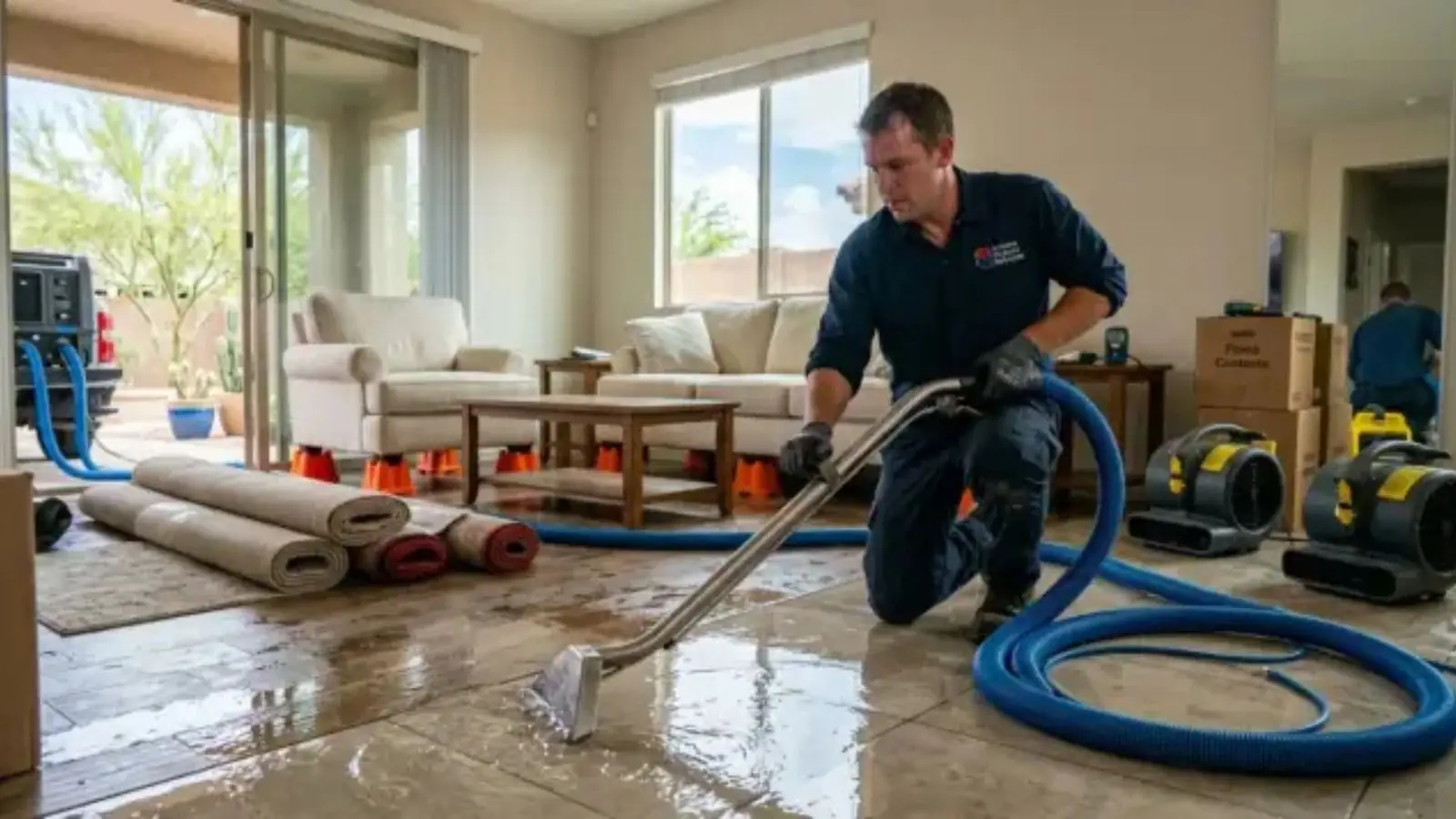
Emergency water removal in West Hollywood, CA means getting standing water out of the building with pumps and extraction equipment before it soaks into floors, walls and furniture. It is used after a burst pipe, a failed water heater, a dishwasher or washer overflow, a roof leak or a flooded garage. The 24/7 line is open at night and on weekends, and callers get a plain list of what to do while a crew is dispatched.
Before anything else, stop the source. Close the fixture valve or the main shut-off, and if neither can be reached, call the property manager or the utility. Leave power on only where the floor is dry, turn it off from a dry spot if you can do so safely, and keep out of standing water near outlets or the panel.
When standing water is an emergency
Water on a hard floor can be removed in minutes. Water on carpet, under cabinets or inside a wall is different, because the surface looks fine while the pad and framing keep absorbing it. Call immediately for any of these situations.
- A pipe or hose is still running and cannot be shut off.
- Water is more than a thin film across a room or has reached the next room.
- Water came through a ceiling or light fixture.
- A crawl space, garage or lower level has water standing in it.
- The water might be gray or dirty, as with a backed-up drain.
What extraction equipment does
Submersible pumps clear deep water quickly. Truck-mounted and portable extraction units pull water from carpet, pad and hard floors, and weighted tools press water out of fibers. Wet vacuums handle corners and thresholds, and drying starts as soon as the surface water is gone.
Extraction is the first step of drying, not the last. A floor that has been extracted still holds water in the pad, subfloor and base of walls, so the next steps are moisture mapping and water mitigation.
Burst pipe water damage
A burst pipe under a sink, behind a wall or in a ceiling can move a surprising amount of water in the first hour. Typical calls describe a kitchen floor with water all around, a cabinet base that is soaked or a whole unit with a film of water across it.
Shut off the nearest fixture valve or the main, open a faucet at the lowest point only if the line is already off and it is safe, and take photos. Extraction follows, then the crew opens walls or cabinets where water traveled and dries them. The plumber repairs the pipe, and the restoration crew does the water side of the job.
The same steps apply to a failed supply line behind a toilet, a water heater leak or a washer hose that let go. Keep the failed part if you can, since your insurer or property manager may want to see it.
Crawl space and below-grade water
Water in a crawl space or lower level is hard to see and slow to dry. Callers describe broken irrigation lines or backflow flooding the area under a house, and the standing water has to be pumped before dehumidifiers and air movers can work. Moisture readings in framing and subfloor decide when it is dry.
| Situation | Usual first move | What follows |
|---|---|---|
| Thin film on a hard floor | Mop or wet vacuum, then fans | Check cabinets and baseboards for hidden water |
| Soaked carpet and pad | Extraction with a truck-mounted or portable unit | Pad removal if needed, then drying equipment |
| Water in a ceiling or wall | Stop the source, keep people clear | Controlled opening and cavity drying |
| Standing water in a garage or crawl space | Submersible pump, power safety first | Dehumidifiers and moisture readings |
| Gray or dirty water | Protective gear and containment | Flood damage restoration steps |
Every job starts with safety and the water category.
What affects the cost of water removal
- The water category and whether it carries contamination.
- Depth and spread of the water and how many rooms it reached.
- Materials that need extraction, such as carpet, pad and hardwood.
- Access and equipment, including stairs, elevators and the distance from the curb.
- How much drying and rebuild comes after removal.
Insurance note
Sudden and accidental water damage is often covered, gradual leaks and neglect often are not, and flood damage is usually excluded without separate flood coverage. Check your policy and ask your insurer before you discard anything. Keep the failed part, take photos and keep receipts.
Standing water right now?
Call the 24/7 line. We explain the shut-off steps while a crew is dispatched.
Water removal in a hillside-to-flatland city
The city's 2023 hazard mitigation plan gives an average grade of about 6 percent across the northern third of West Hollywood and about 2 percent across the southern two thirds, with elevations from roughly 160 to 500 feet. Water released uphill runs downhill. A leak in a north-side building can end up in a lower unit, a stairwell or a garage to the south, so the property manager should check below as well as at the source.
Building height also matters for extraction. In mid-rise buildings the water often drains down through floors, and crews work down the stack with portable units because large hoses are hard to run through lobbies and elevators. Tell the manager where the wet units are so access can be arranged before the crew arrives.
Sources: City of West Hollywood Local Hazard Mitigation Plan (2023).
Emergency water removal questions from West Hollywood
Do you handle water removal emergencies at night or on weekends in West Hollywood?
Yes. The 24/7 line takes calls overnight, on weekends and on holidays, and a crew is dispatched when one is available. No arrival time is promised, and you are told what to do while you wait.
What should I do while waiting for a crew?
Shut off the water source, lift valuables and rugs off wet floors, take photos and keep people and pets away from standing water near electricity. If water reached the panel, outlets or gas appliances, leave and call 911 or the utility first.
Is water extraction the same as drying?
No. Extraction removes standing water. Water mitigation covers the moisture mapping and drying that follows, because walls, pad and subfloor stay wet after the surface is cleared.
Will you fix the burst pipe?
A plumber repairs the pipe. The restoration crew handles the water side: extraction, drying, cleanup and rebuild. Many callers need both on the same day.
Can you remove water from a crawl space?
Yes. Crawl space water is pumped out and dried from below with directed air and monitored with moisture readings.
Do you offer emergency water removal in Beverly Hills?
Yes. The Beverly Hills page lists the ZIP codes served and the 24/7 line is the same.