
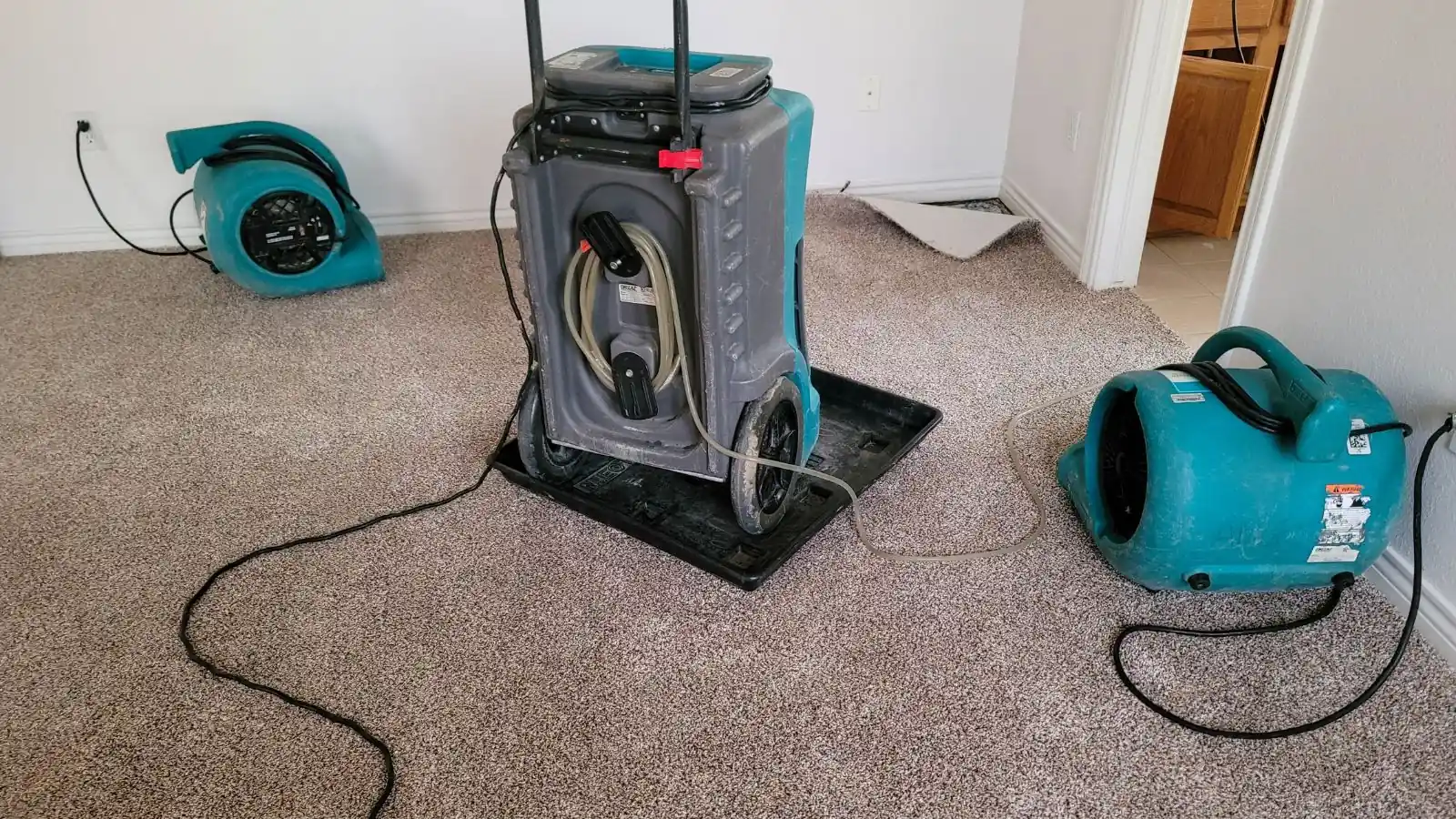
Water is moving into drywall, flooring and framing right now, so the first hours matter most. Emergency water mitigation in West Hollywood, CA is the work that stops that spread: isolating the source, removing standing water, mapping where moisture went and setting drying equipment. The 24/7 line is open at night, on weekends and on holidays.
While you wait, shut off the water at the fixture or main valve if you can reach it, and lift small items and rugs off wet floors. Turn off power to wet areas only if you can do it from a dry spot, and keep people and pets out of the water. If water has reached outlets, the panel or anything gas related, stay clear and call the utility or 911 before calling us.
When water is an emergency
Call right away when any of these are true. Waiting lets water wick into materials that were dry an hour ago.
Water is still running or dripping
A pipe, hose, roof or condensate line is still feeding the damage. Shutting it off comes first, then removal.
A ceiling is bulging or sagging
Trapped water has weight. Keep people out from under it and call before anyone pokes or cuts it.
Carpet or flooring is soaked
Padding and subfloor hold water long after the surface feels manageable, and wicking continues.
Walls feel cold, damp or soft
Water inside a wall cavity cannot be seen. A meter and thermal camera find it.
Wet wall, damp carpet or a musty smell? That is a mitigation job
People rarely search for the trade name. They search for a ceiling stain that keeps spreading, a carpet that will not dry or a smell that showed up after a leak. All of those point to moisture that is still in the building, and the fix is mitigation: finding where the water went and drying it before it damages more material.
What emergency mitigation includes
Stop and assess
The source is isolated and the crew checks safety, water category and how far moisture traveled.
Extract
Standing water comes out with pumps and extraction units so drying can begin.
Map and set equipment
Moisture meters and thermal imaging mark wet areas, then air movers and dehumidifiers go in.
Monitor to dry
Readings are logged and equipment is adjusted until materials reach their dry goal.
Structural drying
Structural drying is the part that takes the longest and shows the least. Air movers push dry air across wet surfaces, and LGR or desiccant dehumidifiers pull moisture out of the air so it cannot settle again. Wall cavities, ceiling voids and floors under cabinets are dried with directed airflow, small holes or removable panels, and drying mats on hardwood.
A crew returns to read moisture levels, compare them with an unaffected reference area and move or remove equipment as materials reach their goal. Drying time depends on the materials, the water category and the equipment, so several days is common and the readings, not the calendar, decide when the job ends. Once the structure is dry, water damage cleanup removes what could not be saved.
Water categories and what they change
| Category | Typical source | What it changes |
|---|---|---|
| Category 1 | Clean source such as a supply line or tap | Most materials can be dried in place if caught early |
| Category 2 | Significant contamination such as appliance discharge | Porous materials like carpet pad are often removed |
| Category 3 | Grossly contaminated such as sewage or rising flood water | Affected materials are removed and the area is cleaned and sanitized |
Water can move up a category the longer it sits. Ask any company whether its crews work to ANSI/IICRC S500.
What affects the cost of mitigation
- The water category, since contaminated water adds removal and sanitizing steps.
- Affected area, measured in rooms, floors and wall height reached.
- Materials involved, because hardwood, plaster and insulation dry at different speeds.
- Drying days and the number of air movers and dehumidifiers needed.
- Rebuild scope afterward, which is estimated separately from drying.
Insurance and documentation
Many policies expect you to take reasonable steps to stop further damage, and sudden and accidental water damage is often covered while gradual leaks and flood usually are not. Check your policy and ask your insurer before major work. Moisture readings, drying logs and photos taken during mitigation are the records a claim file usually needs.
Water still spreading?
Call the 24/7 line now. We explain what to do while a crew is dispatched.
Mitigation in a city of shared walls
About four in five occupied homes in West Hollywood are rented according to the 2020 Census, and the city's hazard plan notes mid-rise apartment buildings from the 1920s and 1930s. In buildings like these a leak rarely stays in one unit, because water follows pipes and floor assemblies into the unit below. Tell the property manager right away so the source can be shut off for the whole stack and drying can reach every wet unit.
Water service also differs by address. The City of West Hollywood says LADWP serves most areas of the city while Beverly Hills Water serves certain areas on the west side. Knowing which utility serves your building tells you whose street valve or meter is involved when the building shut-off is stuck or out of reach.
Sources: 2020 U.S. Census housing tenure, City of West Hollywood Local Hazard Mitigation Plan (2023) and the City of West Hollywood water conservation page.
Water mitigation questions from West Hollywood
Do you handle water mitigation emergencies at night or on weekends in West Hollywood?
Yes. The dispatch line runs 24/7, including nights, weekends and holidays, and a crew is sent as soon as one is available. No arrival time is promised, but you are told what to do while you wait.
How long does structural drying take?
Several days is common, and the moisture readings decide when drying ends. Hardwood, plaster and wet insulation dry slower than painted drywall, and the water category matters too.
Can I rent air movers and dehumidifiers from you?
The service is a dispatched crew that sets, monitors and removes the equipment. Rented fans without moisture readings often leave wet cavities behind, which is why the readings are part of the job.
What is the difference between mitigation and repair?
Mitigation stops the spread and dries the structure in the first days. Water damage repair is the rebuild afterward, with new drywall, flooring and paint.
Does my insurer expect me to mitigate?
Many policies expect reasonable steps to prevent further damage, and the California Department of Insurance claims guide tells owners to make temporary repairs. Ask your insurer what yours requires and keep receipts.
Does mitigation cover Beverly Hills as well?
Yes. The same 24/7 line serves Beverly Hills, and the Beverly Hills page has its ZIP codes.