
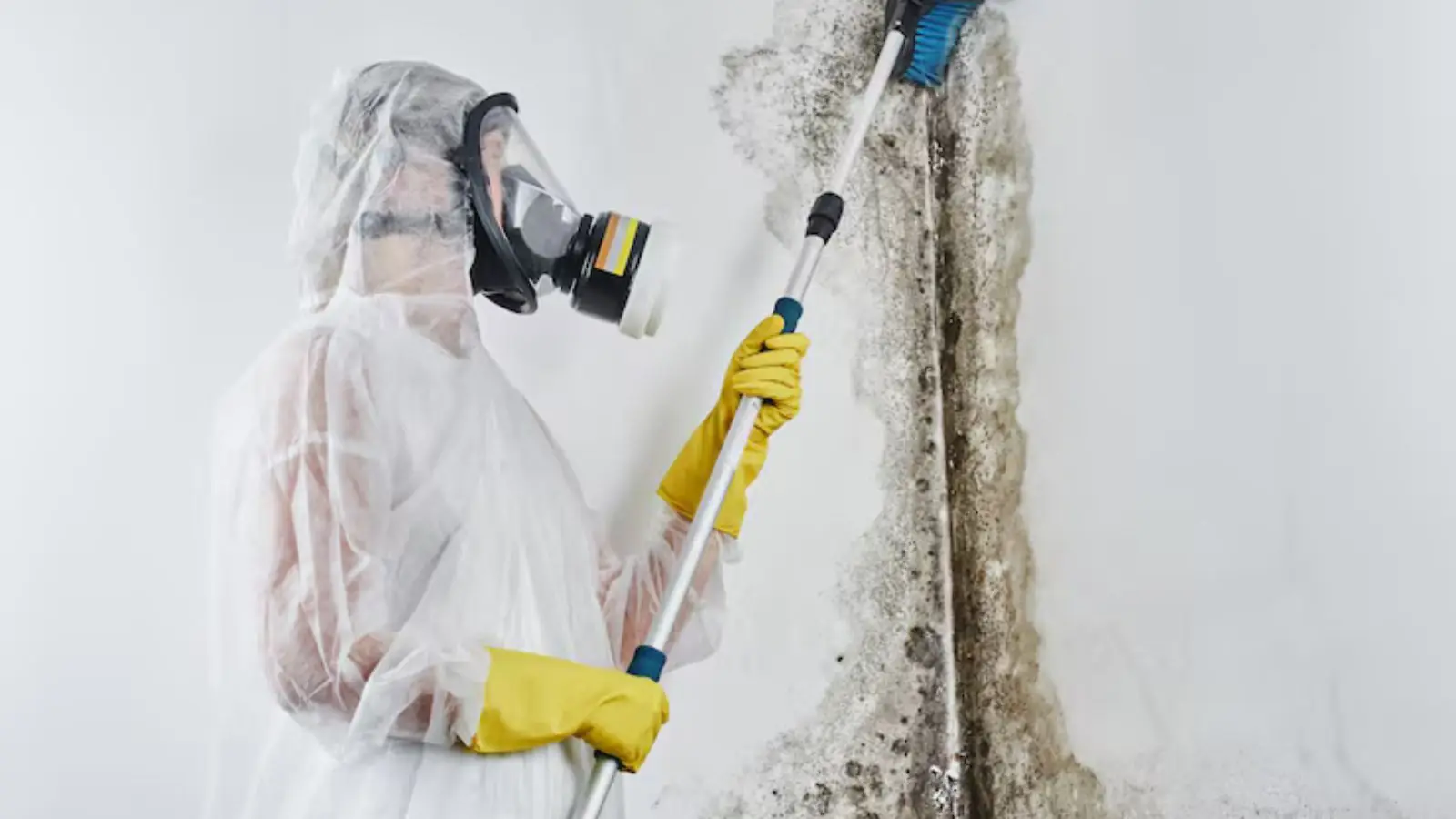
Mold remediation in West Hollywood, CA is the process of containing, removing and cleaning mold growth, then confirming the area is clean and dry. It always includes finding the moisture that fed the mold, because mold needs moisture to grow and cleaning without fixing the water source solves nothing. Mold work is a secondary service on this site, but it is where a large share of callers land.
Typical calls describe a leak under a bathroom sink, spots in a closet where furniture was pushed against a wall, a bathroom ceiling corner above the shower, or a musty smell under carpet after a leak. If the leak is still active, call about water mitigation first, since drying stops the supply of moisture. Health questions belong to a physician, not to a restoration company.
Spots in the bathroom, a musty closet or a wet-carpet smell? Start here
Most people search for what they see, not for the trade name. They search for dark spots at the corner of a shower ceiling, a smell under carpet or a closet wall that looks stained. These are all moisture problems first and mold problems second, and the sequence is: find the water source, fix it, then remediate.
The EPA says to dry wet materials within 24 to 48 hours to prevent mold growth, and that mold usually does not grow if wet materials are dried in that window. If it has been longer than that, a visible or smelly area deserves a closer look.
Mold testing and inspection
Inspection starts with a visual check and a moisture meter, because visible growth and a moisture source tell most of the story. The EPA does not recommend routine sampling and says that if visible mold is present, sampling is unnecessary. It also says there are no EPA or other federal limits for mold or mold spores, so a lab number cannot show compliance with a federal standard.
Testing still has its place. Callers ask about independent clearance testing, mold assessment for a condo association and checks before a sale. After cleanup, surface sampling by professionals can help confirm an area was cleaned adequately, and clearance by a party separate from the remediation crew keeps the result independent. A buyer's lender may hold funding until mold is addressed, and no company can promise how a particular lender will respond.
Mold removal and black mold cleanup
Black or dark growth gets attention, but color does not identify a species and the removal method does not depend on the color. Containment, negative air, HEPA filtration, removal of porous materials and cleaning of hard surfaces are the same for any visible growth.
The EPA says porous materials such as ceiling tiles and carpet may have to be thrown away if they become moldy, and that mold can be hard or impossible to remove from them. Wood framing is cleaned and dried, and drywall that is moldy is typically cut out and replaced.
Find the moisture
The leak, condensation or humidity source is located and fixed first.
Contain
Plastic barriers and a negative air machine keep spores from drifting through the home.
Remove and clean
Moldy porous materials come out and surfaces are cleaned with HEPA vacuuming and damp wiping.
Dry and verify
The area is dried, then checked with moisture readings and, where wanted, clearance testing.
Mold after water damage
Mold after water damage is common when wet materials stay wet longer than a day or two. A toilet leak above a finished ceiling, an AC condensate line that backed up into a closet or a roof leak into an attic can all leave hidden growth in insulation, drywall backs and framing. These cases need drying through water mitigation and then removal of what mold has already reached.
If a cleanup crew pulls carpet and finds mold under it, the answer is usually the same: stop the water, contain, remove what is affected and rebuild afterward through water damage repair.
| Situation | Likely moisture source | Typical approach |
|---|---|---|
| Spots at a bathroom ceiling corner | Steam, a failed fan or a shower leak | Fix ventilation or leak, remove affected board, dry and rebuild |
| Closet wall behind furniture | Condensation or a plumbing or AC condensate leak | Locate source, clean or remove affected board, improve airflow |
| Under carpet after a leak | Water that sat in the pad | Remove carpet and pad, dry the floor, inspect framing |
| Small area under about 10 square feet | Past surface moisture | EPA says many owners can clean this themselves |
| Large or hidden growth | Long-term leak | Containment and professional removal |
Situations vary. Moisture readings and a look inside the wall decide each case.
Can I clean it myself?
For a moldy area of less than about 10 square feet, roughly a 3 foot by 3 foot patch, the EPA says many owners can handle the cleanup. Wear gloves, eye protection and a respirator, keep the area ventilated and dispose of porous materials that cannot be cleaned. If the area is larger, if water damage is extensive, or if you are not sure what is behind the wall, stop and get a professional assessment.
Do not mix cleaning chemicals, and do not disturb a large area by scrubbing or sanding, since that spreads material through the home. Renters should tell the property manager before attempting any cleanup.
What affects the cost of mold remediation
- The size of the area and how far growth reaches behind finishes.
- Materials involved, since porous materials come out and hard framing is cleaned.
- Containment setup, negative air and the number of rooms involved.
- Whether the moisture source has been fixed and the area is dry.
- Testing or clearance, which is scoped separately, and the rebuild afterward.
Insurance note
Mold coverage varies widely, and many policies limit or exclude it unless it follows a covered sudden and accidental water loss. Check your policy and ask your insurer before work begins, and keep photos, moisture readings and receipts. Flood damage is usually excluded unless you carry separate flood coverage.
Mold after a leak?
Describe the room and the leak. The scope and price are explained before any work starts.
Hiring for mold work in West Hollywood
The California Contractors State License Board says contractors on a job totaling $1,000 or more in labor and materials must be licensed, and it advises asking for a written contract and paying no more than 10 percent down or $1,000, whichever is less.
Los Angeles County's consumer guide on remediation says mold or asbestos cleanup must follow EPA and Cal/OSHA rules. Ask any company for its license number, verify it at cslb.ca.gov and ask whether its crews work to ANSI/IICRC S520.
With roughly four in five West Hollywood homes rented according to the 2020 Census, many mold calls involve a wall the caller does not own. Tell the property manager in writing, photograph the area and leave the building's plumbing, ventilation and wall repairs to the owner's contractors.
Sources: California Contractors State License Board, Los Angeles County Department of Consumer and Business Affairs remediation guide (2025), EPA, 2020 U.S. Census.
Mold remediation questions from West Hollywood
Do I need mold testing?
The EPA does not recommend routine sampling and says that when visible mold is present sampling is unnecessary. Testing can help in specific cases, such as clearance after cleanup, a condo association assessment or a sale, and independent clearance is done by a party separate from the remediation crew.
Will mold come back after remediation?
No company can promise that. Mold needs moisture, so fixing the leak, condensation or humidity that fed it is the part that matters most.
Is the dark spot black mold?
Color does not identify a species. A lab is needed to identify any mold, and health questions belong to a physician.
Does insurance cover mold?
Coverage depends on your policy. Many policies limit or exclude mold unless it follows a covered sudden and accidental water loss, so check your policy and ask your insurer.
Do you handle mold for a home sale or loan?
Yes, the work can be scoped for a sale or lender requirement, and independent clearance is available through a separate party. No company can promise how a particular lender or buyer will respond.
Do you remediate mold in Beverly Hills too?
Yes. The Beverly Hills page lists the ZIP codes served by the same line.