
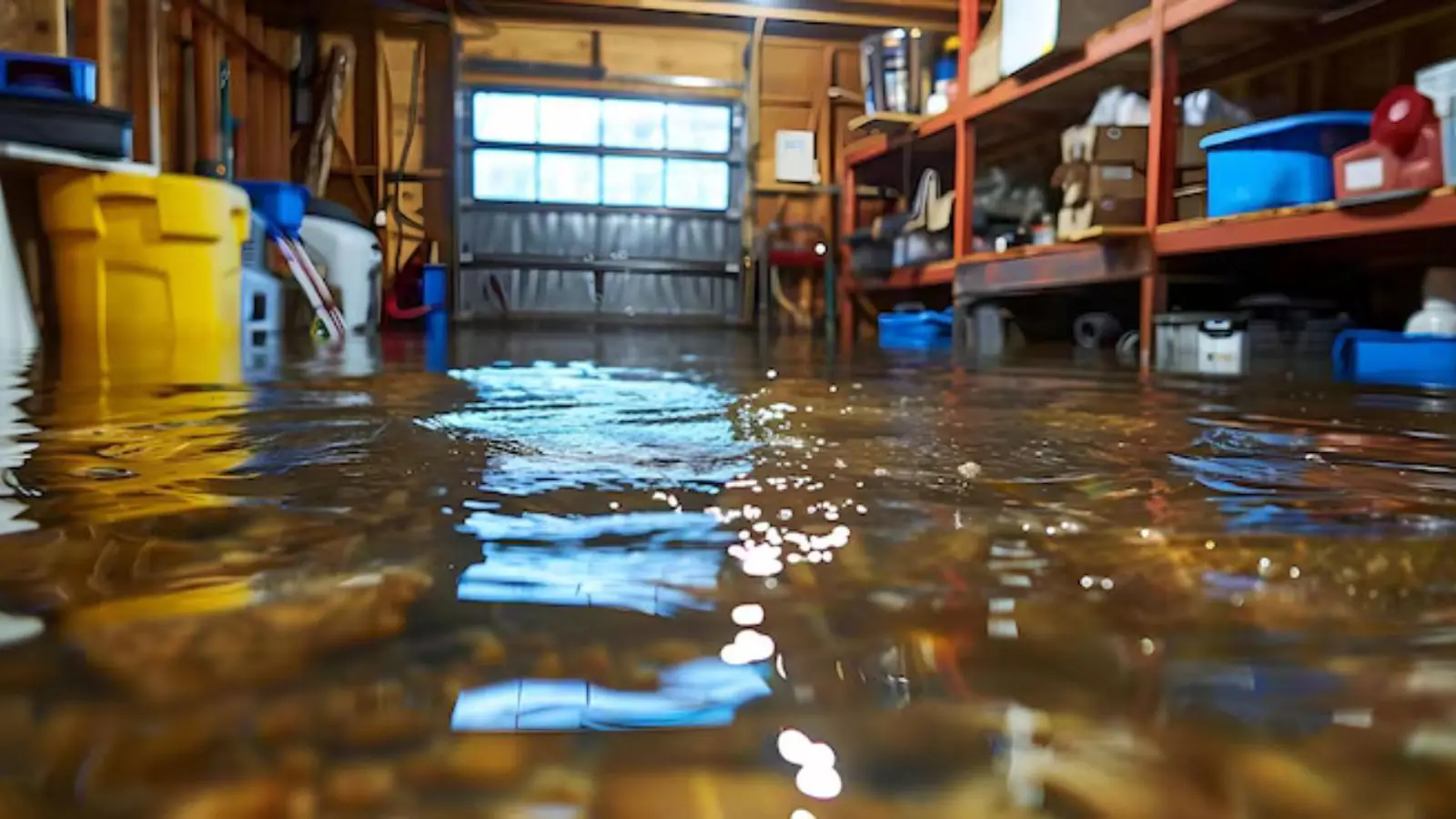
A water main break flooded garage situation in West Hollywood, CA is different from a leaky pipe in your own wall. A water main is the large pressurized pipe that feeds a neighborhood from under the street, and when it ruptures the water arrives in volume, carries street grit, and settles in the lowest spaces it can reach.
Garages, parking levels, storage rooms and ground-floor units sit lowest, so they take the water first. This guide covers what to do in the first hour, how to record the loss, and what the cleanup and drying that follows actually involves.
Safety comes before any cleanup
Do not walk into a flooded garage until you know what is energized. Outlets, subpanels, garage door openers, car chargers and stored batteries can all be live under water, and a vehicle with a large battery should be treated with the same caution as any other electrical source.
If water touches electrical equipment or you smell gas
Stay out of the water, keep other people and pets out, and call 911 for any electrical or gas risk before you call anyone else. Cut power at the panel only if the panel is dry and you can reach it without stepping in water.
Floodwater from a street main can also carry sediment and whatever sat on the pavement, so treat it as contaminated until a crew says otherwise.
Which spaces flood and what to do first
Each lower space has its own hazard. The table below pairs the common ones with a sensible first move, so you can act without guessing.
| Space | Main risk | First step |
|---|---|---|
| Garage or parking level | Live electrical, vehicles, stored boxes | Keep out until power status is known, photograph from the doorway |
| Ground-floor unit | Water in carpet, baseboards and wall bottoms | Lift furniture and valuables onto dry surfaces if the floor is safe to cross |
| Storage room or utility closet | Water heater, panels, wet cardboard | Do not touch equipment, note what was stored for your inventory |
| Elevator pit or stairwell | Standing water and slick floors | Tell the property manager and avoid the area |
The right first step always starts with whether anything electrical is wet.
Getting the water out
Once power is safe, standing water has to come out quickly. Crews use submersible pumps for depth and truck-mounted or portable extraction units for what the pumps leave behind, then move to drying. A garage slab is easier to clear than a carpeted unit, but the same clock applies to both.
Street-main water is usually treated as contaminated, which changes what can be kept. Porous items such as carpet pad, cardboard and drywall touched by it are often removed rather than dried, a call made under the ANSI/IICRC S500 water categories. Our flood damage restoration page explains that sorting in more detail.
Garage or unit under water right now?
The 24/7 emergency line is open. Describe what is wet and what is energized, and a crew can be sent when available.
Documenting a loss caused by a utility pipe
Take photographs and video before anything is moved, including the waterline on walls, the depth in the room and the condition of every item. Keep receipts for any hotel night, pump rental, disposal or emergency purchase, and keep a written log of every call and who you spoke with.
The California Department of Insurance notes that homeowners and commercial policies typically exclude flood, mudslide and debris flow. Whether a burst utility pipe is treated that way depends on your policy wording, so ask your insurer directly and also ask the utility how its own claims process works. Do both, because the answer to one does not settle the other.
- Photograph the waterline, the contents and any vehicles before moving them.
- List damaged items with a rough age and where each was kept.
- Save every receipt and every email or letter you send or receive.
- Write down the name, date and gist of each phone call.
What cleanup and drying involve afterward
After extraction, the structure has to be dried, which is the work described on our water mitigation page. Air movers push air across wet surfaces, dehumidifiers pull moisture out of the air, and moisture meters tell the crew when walls and floors are actually dry.
The EPA advises drying water-damaged areas within 24 to 48 hours to prevent mold growth, which is why delay is costly even after the visible water is gone. Wet drywall, insulation and baseboards that cannot be dried in time are cut out so they do not hold moisture.
A break does not stop at the city line
Utility mains cross boundaries, and neighbors in nearby Beverly Hills can be served by a different water agency than West Hollywood. If your building sits near the west side of town, confirm who supplies your water before you call, since the utility that owns the pipe is the one to ask about claims.
The 2026 Sunset Boulevard main break
In July 2026, ABC7 and NBC Los Angeles reported that a 36-inch LADWP water main broke beneath Sunset Boulevard at Holloway Drive. ABC7 reported about 17 million gallons of water reached the streets, and Sunset was closed between Sherbourne Drive and San Vicente Boulevard for just over a week. NBC Los Angeles described subterranean parking flooded nearly to the roofs of cars, and the cause was still under investigation. LADWP said it would accelerate replacement of the trunk line.
The city's Local Hazard Mitigation Plan describes a grade of roughly 6 percent in the northern third of West Hollywood and about 2 percent in the southern two thirds, with elevations from about 160 to 500 feet. Water released uphill therefore runs south and downhill, so lower garages and below-street spaces collect it. If your building sits downslope of any major street, your garage level is the first place to check.
Sources: ABC7 Los Angeles, NBC Los Angeles, City of West Hollywood Local Hazard Mitigation Plan (2023), California Department of Insurance
Common questions from West Hollywood readers
Is a flooded garage after a water main break an emergency?
Yes, whenever water is spreading, electrical equipment is wet or the space is below street level. Call 911 for any electrical or gas risk, then call the restoration line for extraction.
Will my homeowners insurance cover a utility main break?
It depends on your policy wording. The California Department of Insurance says homeowners policies typically exclude flood, so ask your insurer how a pipe failure from the utility is treated.
Can I pump out the garage myself?
Only after power is confirmed safe and the water is shallow. Deep water, wet electrical gear or a stored vehicle battery are reasons to wait for a crew.
How soon should drying start?
As soon as standing water is out. The EPA suggests drying water-damaged areas within 24 to 48 hours to prevent mold growth.
Does a break on Sunset Boulevard affect lower floors far from the street?
It can. Because West Hollywood slopes from north to south, released water runs downhill and tends to collect in garages and ground-floor units below the break.