
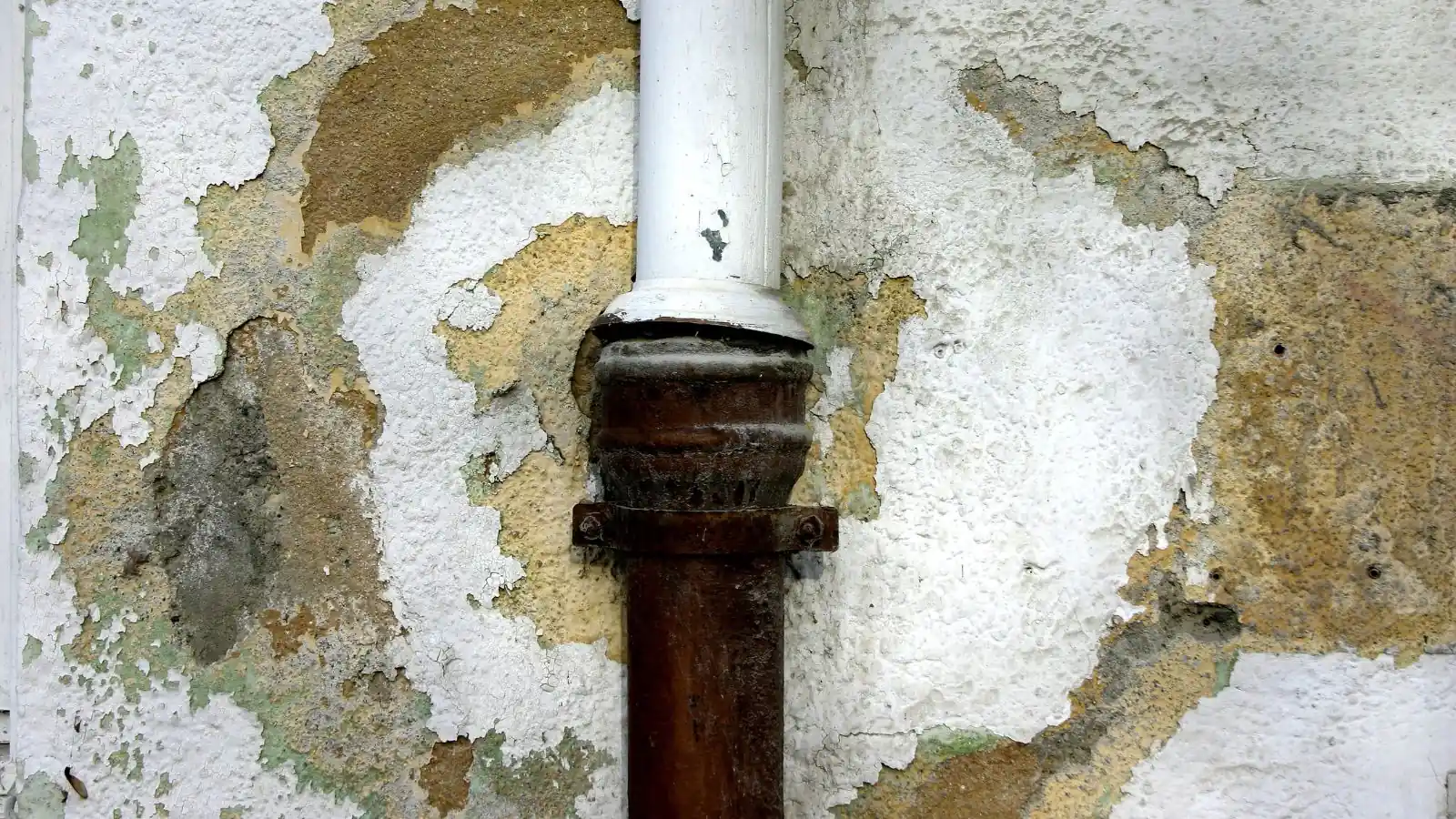
Water damage on a wall in West Hollywood, CA is moisture that has soaked the drywall or plaster, the insulation and the framing behind it. The visible stain is rarely the whole story, because the wet area usually runs well past the paint mark and down inside the cavity.
Fixing it takes four stages: stop the water, open the wall, dry the cavity and rebuild the surface. Skipping the drying stage is what makes repairs fail, so this guide spends most of its time there.
The first hour: protect the wall and the room
Shut off the source if you can find it, whether that is a supply valve, the main shutoff or a leaking window or siding seam. Move furniture away from the wall and lift rugs. Pull outlet covers off wet walls only if the circuit is off, since water and electricity share the same cavity.
Take dated photos before anything changes. A kitchen wall wet from a leak behind exterior siding and a soft spot that looks ready to break through are both common calls. Both need the same quick start, which is stopping the source and getting the wall checked.
What happens inside a wet wall
Drywall paper absorbs water like a sponge, then the gypsum core softens. Paint bubbles, joints open and baseboards lift away from the wall. Behind the surface, insulation holds water against the studs and the bottom plate, which is where trouble lasts the longest.
Plaster and lath walls, common in older buildings, act differently. They dry slowly and can detach from the lath when saturated. A pro checks them with a moisture meter before deciding whether to dry in place or cut sections out.
Drywall or plaster: which repair path fits
Drywall, wet briefly
If water reached it quickly and the board is still firm, drying in place may work. Soft or crumbling board is cut out.
Drywall, soaked for days
Board that sagged, bubbled or went soft is usually replaced, since it will not regain strength.
Plaster over lath
Can often be dried in place if keys to the lath are intact. Loose plaster is removed and patched.
Insulation
Wet batts are removed and replaced. Insulation traps water against the framing and slows drying.
How a wet wall is opened and dried
Measure
A moisture meter and thermal camera mark how far the wet area runs. The cut line goes beyond the last wet reading.
Open the wall
A flood cut removes drywall at a set height above the highest wet mark. Wet insulation and baseboards come out.
Dry the cavity
Air movers and dehumidifiers run until the studs and plates read dry. The crew tracks this daily.
Close and finish
New board, tape, compound, primer, paint and fresh baseboards finish the wall.
The drying stage is the heart of water mitigation. A wall closed too soon traps moisture, and the new paint bubbles all over again.
Wall soft, stained or still wet?
Call the 24/7 line and a crew can be dispatched when available.
Patching, priming and painting
After the cavity is confirmed dry, new drywall is cut to fit and fastened to studs. Joints get tape and several thin coats of compound, sanded between coats. Texture is matched to the existing wall, then a stain-blocking primer goes over the patch.
Painting the full wall from corner to corner makes the repair disappear. A spot-painted patch tends to show a different sheen. The scope and price for this rebuild are explained before work starts under water damage repair.
Exterior leaks and soft spots that look ready to break through
A wall that gets wet from outside, such as a kitchen wall behind failed siding, often shows damage long before anyone sees water. The first signs are a soft patch, a bulge near the baseboard or paint that will not stay on. If a spot feels spongy enough that a hole seems to be forming, stop pressing on it and keep the area clear.
The fix has two halves. The entry point on the outside, such as a siding gap, window seam or flashing, must be sealed so water stops arriving. Then the interior wall is opened, dried and rebuilt. Doing only the inside leaves the wall to soak again at the next rain.
Renters and condo owners should report an exterior source to the property manager or HOA in writing, since the building envelope is rarely theirs to repair. Include dated photos of both the wet wall and the outside wall.
When mold is part of the picture
Dark spotting on the back of removed drywall or on a baseboard means moisture lasted. Small areas are cleaned during the repair. Larger growth, or growth that keeps returning to the same spot, needs containment and removal, which is covered under mold remediation.
Opening a wall can change the permit picture
The City of West Hollywood's Building and Safety Division sits on the second floor of City Hall at 8300 Santa Monica Boulevard. Its permit FAQ exempts the repair of leaks in water piping, valves or fixtures. It also says that if drain, soil, waste or vent piping has to be replaced, a permit and an inspection are required.
That distinction matters once a wall is opened. Patching a pinhole leak in a supply line is one thing, while replacing a section of drain pipe behind the same wall is another. Ask the plumber or contractor which category your repair falls into before the wall is closed, so an inspection can happen while the pipes are still visible.
The same question comes up for homeowners next door, so if you live just west of the city line, the page on water damage restoration in Beverly Hills explains how crews work there.
Sources: City of West Hollywood Building and Safety frequently asked questions.
Common questions from West Hollywood readers
How long does a wet wall take to dry?
It depends on the materials, how much water got in and the equipment used. Crews track moisture readings daily and finish when the framing reads dry, not on a fixed date.
Can I paint over a bubbling wall?
No. Bubbles mean water is behind the paint. Paint over it and the bubbles come back. Dry the wall first, then repair the surface.
Does every wet wall need to be cut open?
Not always. Briefly wet drywall that is still firm can sometimes be dried in place, while soft or sagging board is removed. A meter reading settles it.
What if the wall is wet from exterior siding or a roof?
The outside entry point must be sealed or covered first. Interior drying and repair only last if the water stops coming in.
Do I need a permit to repair a wet wall in West Hollywood?
Fixing leaks in water piping, valves or fixtures is exempt, according to the city's Building and Safety FAQ. Replacing drain, soil, waste or vent piping requires a permit and inspection, so ask your contractor which applies.