
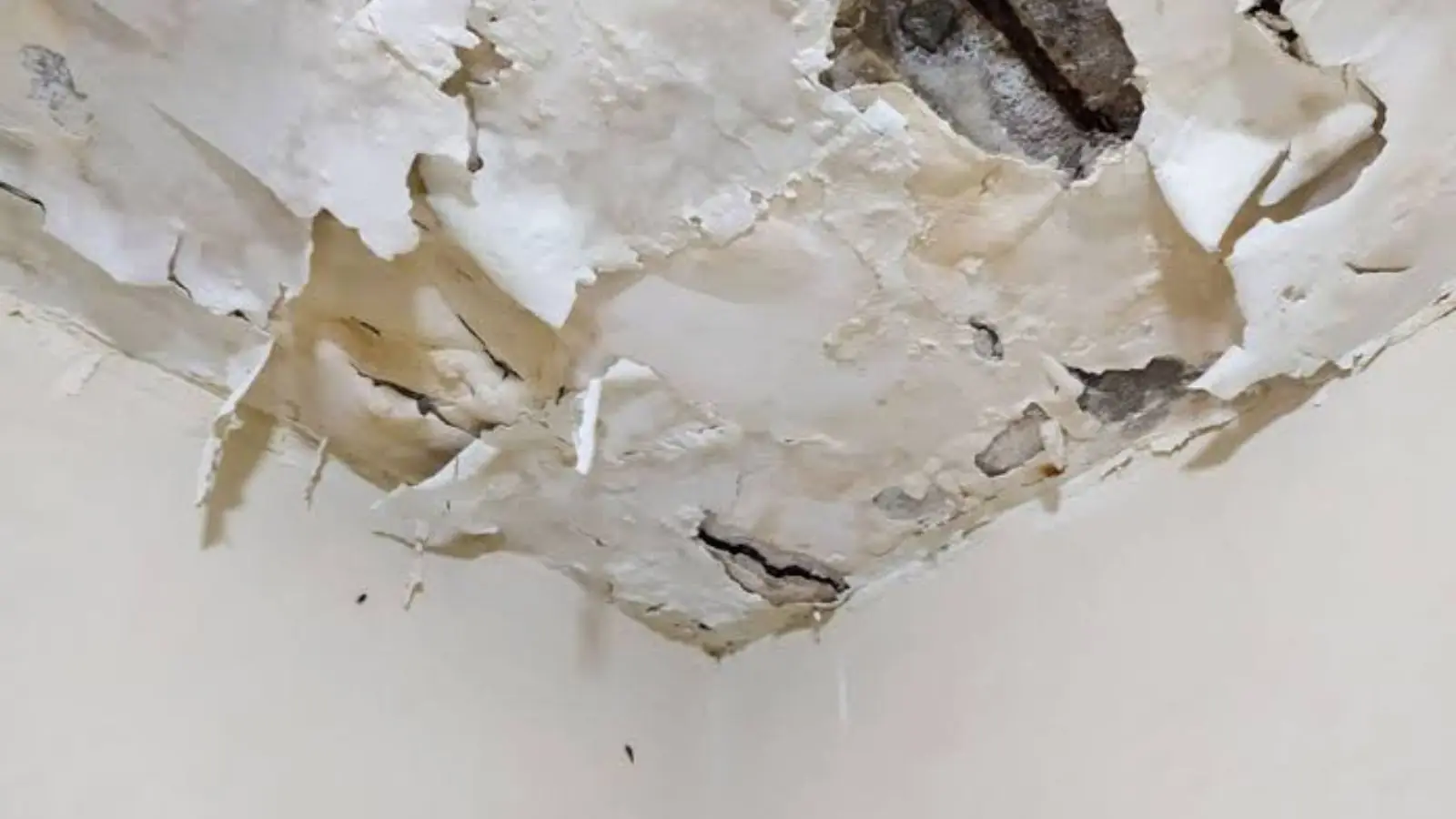
To repair a water damaged ceiling in West Hollywood, CA, you stop the water source, dry the space above the drywall, cut out whatever stayed wet, and only then patch, prime and paint. A water damaged ceiling is drywall or plaster that has soaked up leaked water from a roof, a pipe, a fixture or a unit overhead.
Painting over a stain first is the most common mistake. Moisture trapped above the paint keeps working, and the brown ring comes back within weeks. This guide covers the right order of work, what a sagging ceiling means, and how a leak is traced in a taller older building.
A sagging or bulging ceiling is an emergency
A ceiling that droops, bulges or drips steadily is holding water that can drop all at once. Soaked drywall is heavy, and it can fall without warning. Keep people and pets out of the room, slide furniture and valuables aside, and do not stand under the low spot.
Before you touch anything
If the wet area sits near a light fixture, fan or outlet, do not touch the switch. Turn off the breaker only if you can reach the panel while standing on dry floor.
If you see sparks, smell burning or hear buzzing, leave the unit and call 911 or the utility before you call a restoration line.
People who call restoration lines about ceilings tend to describe the same few situations. A drip that started only a short while ago, a wet spot in a closet ceiling, a stain under an upstairs bathroom, and a section that has already come down. Each one starts the same way, with stopping the source.
Step by step: how a water damaged ceiling is repaired
Stop the source
Shut the fixture valve or the main water valve. If rain or a roof is the cause, the leak must be sealed or covered before interior work counts.
Relieve trapped water
Only when the area is safe, a small hole at the lowest point of a bulge over a bucket lets water drain instead of dropping the whole panel.
Dry and cut out
Wet insulation and soft drywall come out. The cavity above is dried with air movers and dehumidifiers until readings return to normal.
Patch and finish
New board, tape and compound, stain-blocking primer, matching texture, then paint across the whole ceiling plane.
What the stain is telling you
The look of the damage points to how much water is involved and how urgent the next step is. Use the table as a first read, then confirm with a moisture meter.
| Symptom | What it usually means | What to do |
|---|---|---|
| Brown ring, dry to touch | A past leak that may be inactive or only intermittent | Watch it after the next rain or after fixtures upstairs run, and get a meter reading before painting |
| Damp, growing stain | An active leak | Stop the source, then start drying the same day if possible |
| Bubbling or peeling paint | Moisture in the paper face of the drywall | Expect to open the ceiling and check the cavity |
| Sagging or bulging panel | Water pooled above the drywall | Clear the room, relieve the water safely, treat as an emergency |
| Musty smell, dark spotting | Moisture that has lasted for days | Dry the area quickly and review mold remediation options if spots spread |
| Cracked or lifting tape joints | Drywall that softened and shifted | Replace the section instead of re-taping it |
A table cannot replace a moisture reading. Hidden water often reaches well past the visible stain.
Ceiling still wet or dripping?
Call the 24/7 line and describe what you see. A crew can be dispatched when available.
Drying the cavity before anything is closed
The stain is only the lowest point of a wider wet area. Insulation, joists and the back of the drywall all hold water, and they dry far slower than the paint on the surface. Crews map the damage with moisture meters and a thermal camera, then set air movers and dehumidifiers to pull the moisture out of the cavity.
This stage is called water mitigation, and it decides whether the repair lasts. Wet insulation is removed because it holds water against the framing. Joists are dried until readings match dry wood nearby. If the cavity is closed too early, the new drywall wicks up what is left.
Patching, priming, texture and paint
Once the cavity is dry, wet drywall is cut back to firm, dry board, ideally to the center of a joist so the new piece has something to screw into. Fresh board goes in, joints are taped and coated, and the patch is sanded smooth. Texture is matched before any primer goes on.
A stain-blocking primer seals old marks that would otherwise ghost through. Painting the entire ceiling plane from wall to wall hides the seam far better than a patch of new paint. Pricing and scope for this finish work are explained before it begins as part of water damage repair.
Document the loss before repairs begin
Take dated photos and short video of the ceiling, the room and any damaged belongings before anything is cut out. Save plumber invoices, texts with a property manager and any receipts. Standard policies often cover sudden and accidental leaks and often exclude slow, long-running ones, so check your policy and ask your insurer what they need to see.
Why tall older buildings hide the real source
The City of West Hollywood's 2023 Local Hazard Mitigation Plan notes that some apartment buildings of seven and eight stories date from the 1920s and 1930s, and that many buildings in the city were built before 1993, when building codes were less strict.
In a tall older building, a ceiling stain often traces to a unit several floors up or to a vertical pipe run shared by many apartments. If you rent or own in one, ask the property manager or HOA to check the units above and the shared risers before you repaint. Give that request in writing with your photos attached so there is a record.
The same approach applies just across the city line in Beverly Hills, where water damage crews also respond to ceiling leaks in older multi-story buildings.
Sources: City of West Hollywood Local Hazard Mitigation Plan (2023).
Common questions from West Hollywood readers
Can I just paint over a ceiling water stain?
Not safely. If the drywall or insulation above is still wet, the stain returns and the paint peels. Get a moisture reading first, dry the cavity, and use a stain-blocking primer once the ceiling is confirmed dry.
Should I poke a hole in a bulging ceiling?
Only when the area is safe, meaning no fixtures or wiring in the wet zone and no one standing under it. A small hole at the lowest point over a bucket can drain trapped water. If you are unsure, stay out of the room and call for help.
Does a ceiling leak always mean mold?
No. Mold needs moisture that lasts, so a leak dried promptly often does not lead to it. A leak that sits for days, or a musty smell with dark spots, is a reason to bring in a crew quickly.
Who pays when the leak comes from the unit above?
It depends on the lease or HOA rules, the cause of the leak and the policies involved. Tell the property manager in writing, keep your photos, and ask your own insurer how to file.
Who do I tell first about a ceiling leak in a West Hollywood apartment building?
Tell the property manager or building owner in writing the same day, with photos attached, so they can shut off the source and check the units above. Then call a restoration line to start drying your unit.