
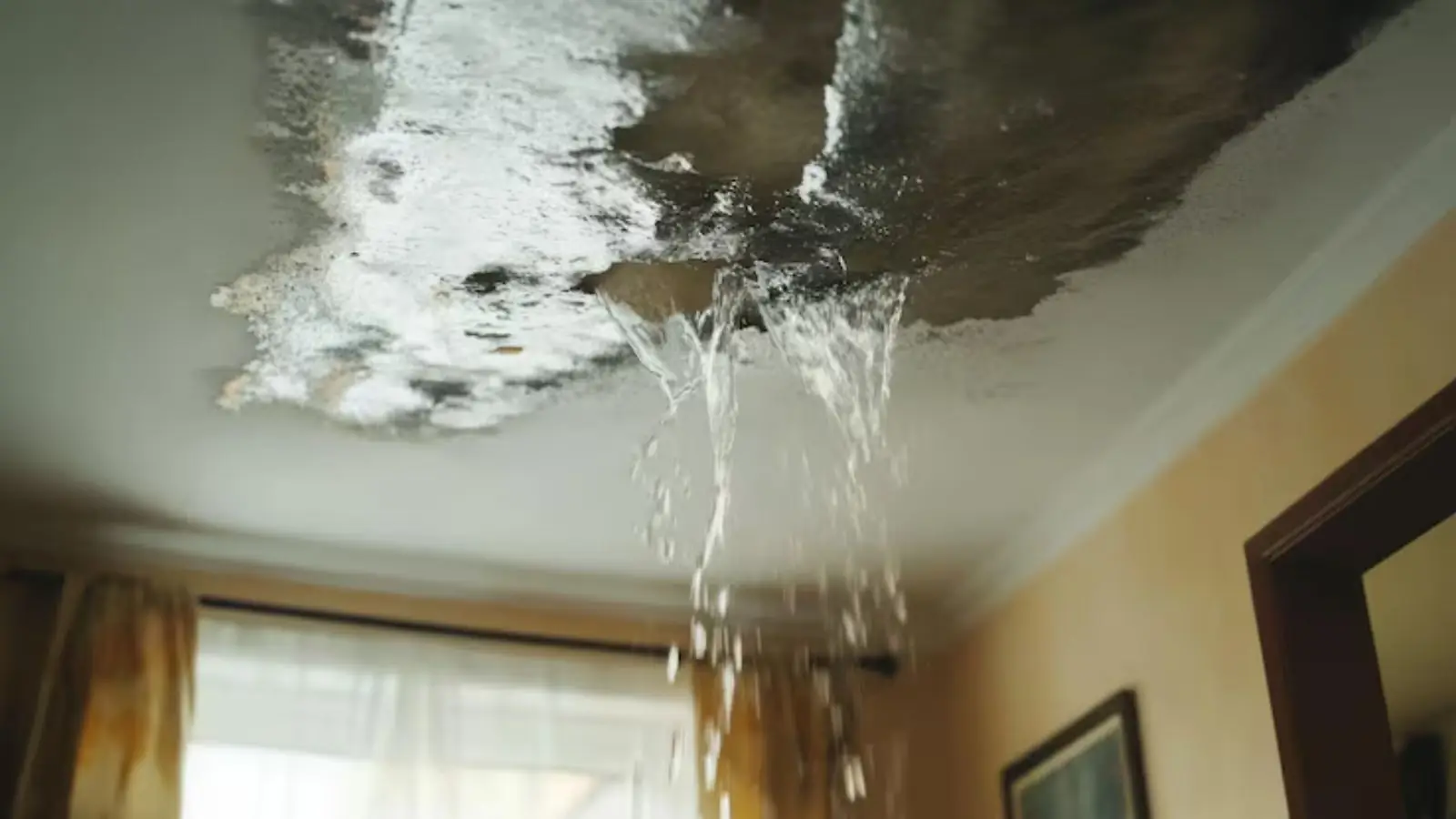
A ceiling leak from an upstairs unit in West Hollywood, CA is a shared-building problem, which means the source is usually a pipe, fixture or appliance you do not control. A ceiling leak is water moving down through the floor above, collecting in the ceiling material and then stains, bulges or drips into your living space.
As a renter you cannot fix the source, but you can protect your belongings, create a record and make sure the right people act fast. This guide walks through the order that works best.
Protect people and belongings first
If water is dripping, move furniture, electronics and anything fabric out from under it. Set a bucket or large container below the drip and lay towels around it. Keep children and pets away from any area where the ceiling is sagging.
Do not poke a bulging ceiling unless you are told it is safe
A bulge can hold a lot of water and the plaster or drywall may be heavy and weak. Releasing it can bring material down onto you and spread water across the room.
If the ceiling is sagging badly or light fixtures are wet, stay out of the room, avoid switching those fixtures on, and ask for help right away.
Tell the property manager in writing
Phone calls help, but a written message creates a record. Send a text or email to your property manager or building contact saying where the water is coming through, when you noticed it and that you want the source found and stopped. Attach photos.
Ask directly who is arranging drying and repair, and ask for the name of the contact handling it. If you do not get a response promptly, follow up in writing again. Do not wait for the stain to dry on its own, because moisture trapped above or inside the ceiling can keep working.
Photograph everything before it changes
Take wide shots of each room and close shots of the stain, the drip and every damaged item. Note the date and time. If you shut off a fixture of your own, such as a sink or toilet that is the source, record that too, since it shows you acted.
Make a list of belongings that got wet with a rough age for each. This list helps whether a claim goes through your landlord's insurance, your own renters policy or both.
Water coming through the ceiling right now?
The 24/7 line is open. Describe where it is dripping and whether the ceiling is sagging.
Who does what
| Who | Typically responsible for | What you should ask or do |
|---|---|---|
| You | Moving belongings, photos, written notice | Send your notice quickly and keep copies |
| Property manager | Finding and stopping the source, arranging drying and repair | Ask who is arranging drying and when |
| Your renters insurer | Evaluating your own contents loss under your policy | Ask what your policy covers and what it needs from you |
Responsibilities differ by lease and policy. Ask rather than assume.
Why drying matters even when the leak has stopped
Once the source is fixed, wet ceiling material, insulation and wall cavities still need to dry. The EPA advises drying water-damaged areas within 24 to 48 hours to prevent mold growth. Our water mitigation page explains how crews use moisture meters, air movers and dehumidifiers to confirm a ceiling and the walls beside it are dry.
After drying, damaged drywall or plaster is cut out and rebuilt, which is covered on our water damage repair page. If the building spans a city line, for example near Beverly Hills, the same steps apply.
Handling wet belongings and clothing
Hard items such as glass, metal and plastic can usually be wiped and dried. Soft items such as upholstery, mattresses, rugs and paper hold water longer, so move them to a dry room and photograph them before anything is thrown away. Do not discard anything your insurer may ask to see unless it is unsafe to keep.
Electronics that were dripped on should stay unplugged until they are dry and checked. Keep receipts for hotel nights or laundry if the room cannot be used, since these costs may matter later.
Signs that moisture is still hiding
A ceiling that looks dry on the surface can still hold water above it. Watch for a musty smell, paint that bubbles or peels, stains that grow back after drying and a ceiling that feels cool or soft to the touch.
- A smell that gets stronger when the room is closed up.
- Spots that darken again a day or two after wiping.
- A ceiling that stays lower or sags more than before.
- Warped baseboards or lifted flooring near the wall below the leak.
Report any of these to your property manager in writing right away and ask for moisture readings. A crew uses a meter to check what the eye cannot see, and early checking is cheaper than finding mold later.
Why this happens so often here
Roughly 80 percent of occupied housing units in West Hollywood are renter-occupied, according to the 2020 Census. In a city where most people live in multi-unit buildings, shared floors and ceilings are the norm, so a leak through your ceiling is most often someone else's pipe.
The City of West Hollywood's Local Hazard Mitigation Plan notes that most single-family homes and duplexes are small and date from the 1920s, and that some 7 and 8 story apartment buildings date from the 1920s and 1930s. Older plumbing in older buildings raises the odds of a failure upstairs, so report any new stain quickly. If your manager is slow to act, you can consider contacting the city for guidance.
Sources: U.S. Census Bureau 2020 housing tenure data, City of West Hollywood Local Hazard Mitigation Plan (2023)
Common questions from West Hollywood readers
Can I fix the ceiling myself?
Not safely until the source is stopped and the ceiling is dry. Tell your property manager first and ask who is arranging drying and repair.
Should I move out during a ceiling leak?
That depends on how much water, whether the ceiling is sagging and what is wet. If the room is unsafe, stay out and ask your manager about next steps in writing.
Is renters insurance worth checking after a leak?
Yes. Your renters policy may respond to your own belongings, so ask your insurer what it covers and what it needs from you. Keep photos and receipts.
How long before mold can start?
The EPA says drying water-damaged areas within 24 to 48 hours helps prevent mold growth, so speed matters even if the drip stops.
Who do I call for an upstairs leak in a West Hollywood apartment building?
Start with your property manager in writing. If water is spreading or the ceiling is sagging, call the restoration line for emergency help.