
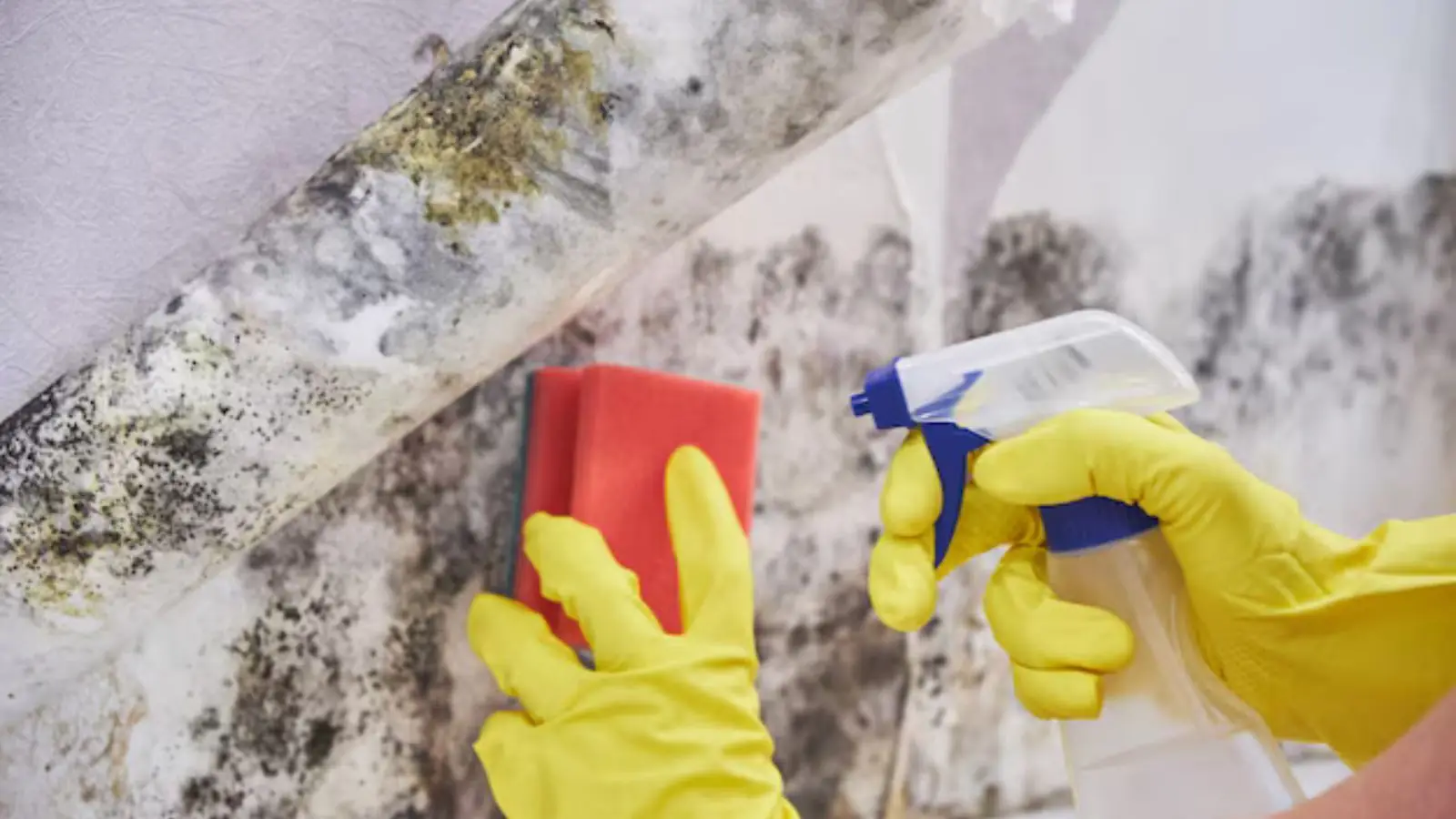
Cleaning mold off walls means removing visible growth from the surface and drying the wall so it stops feeding the next patch. In West Hollywood, CA, where most homes are rented, the first call is often to a property manager rather than a cleaning aisle.
Mold grows only where materials stay damp, so the cleaning itself is the easy part. This guide covers the order of operations, a surface-by-surface table and the point where a mold remediation crew should take over.
Find the water before you touch the mold
A wall stains from the inside out. Look for the cause above, behind and below the patch, and ask whether a pipe, a roof, a window or a bathroom fan is feeding it.
Common culprits include a slow supply line leak inside the wall, a failed shower seal, a clogged air conditioner condensate line and cold surfaces where indoor air condenses. If the wall is still damp to the touch, cleaning today only buys a few weeks.
The 10 square foot guideline
The EPA says that for a moldy area of less than about 10 square feet, roughly a patch 3 feet by 3 feet, an owner can often do the cleanup. If there has been a lot of water damage, or mold covers more than 10 square feet, the agency points readers to its guidance for larger jobs.
Treat that number as a ceiling, not a target. A patch the size of a dinner plate that keeps returning deserves a closer look at what is behind the drywall.
What to do on each type of surface
| Surface | Usual approach | Stop and call a pro if |
|---|---|---|
| Painted drywall | Wipe with detergent and water, dry fully, then repaint once dry | The paper face is soft, bubbled or crumbling |
| Tile and grout | Scrub with detergent, rinse, dry, and reseal grout where needed | Mold shows behind loose tile or in the wall below |
| Ceiling tiles | Replace the stained tiles, since porous material may have to be discarded | Several tiles are stained or the grid is rusting |
| Wood trim | Clean sealed wood and dry it quickly | The wood is soft or the growth runs behind it |
| Wallpaper | Remove the paper and check the wall surface beneath | The glue layer or wall behind is moldy |
This table is a general guide. It does not replace an on-site assessment when a wall has been wet for days.
What to avoid on a moldy wall
Do not sand, scrape or dry brush a moldy wall, because that throws particles into the room. Do not run a fan across the patch before it is cleaned, and do not seal it with paint or caulk while the wall is still damp.
Avoid carrying wet rags or debris through clean rooms. Bag them where you work, tie the bag and take it out the shortest path.
Mold on more than a patch?
Call the 24/7 line and describe the wall. A crew can tell you what an assessment would check.
A careful routine for small patches
- Keep other people and pets out of the room, and close the door to limit spread.
- Wear gloves, eye protection and a well-fitted respirator made for fine particles.
- Mix detergent with water. Never mix bleach with ammonia or with other cleaners.
- Wipe the surface with a damp cloth rather than dry brushing, which sends particles into the air.
- Dry the wall quickly with towels and a fan, then bag the rags and any discarded material.
- Recheck the spot after a week, and wait until the wall is fully dry before painting.
When to stop and call a crew
Stop if the patch grows past the 10 square foot guideline, if drywall feels soft, or if mold appears on several walls. Also stop if the wall was wet from a pipe failure or a flood, because water inside the cavity needs drying equipment, not a sponge.
A crew traces the moisture with meters, contains the room, removes porous materials and dries the structure. If the wall got wet in a sudden event, water mitigation drying is usually the first phase, with cleaning after it.
Renters, permits and who to tell
About 80 percent of occupied housing units in West Hollywood are renter-occupied, according to the 2020 Census. If the mold is on a wall you rent, tell the property manager in writing, attach dated photos and keep a copy. Your renters insurance may also matter if belongings were damaged, so ask your insurer how a claim works.
The City of West Hollywood Building and Safety counter is on the second floor of City Hall at 8300 Santa Monica Boulevard. The city's FAQ says repairing leaks in water piping is exempt from a plumbing permit, but if drain, soil, waste or vent piping must be replaced, a permit and an inspection are required. That is worth knowing before a plumber opens the wall that the mold was growing on.
Sources: U.S. Census Bureau 2020 housing tenure for West Hollywood, and the City of West Hollywood Building and Safety frequently asked questions page
After cleanup, keep a simple log with the date, the spot and a photo. A patch that returns within a month points to moisture you have not found yet, and the log gives a crew a head start.
Keeping the wall from molding again
The EPA says that if condensation or moisture appears on windows, walls or pipes, act quickly to dry the wet surface and reduce the moisture source. It also suggests keeping indoor humidity below 60 percent, ideally between 30 and 50 percent, which a low-cost meter can check.
Use the bathroom fan during and after showers, leave a gap between furniture and exterior walls, and report slow leaks early. Neighbors just west of the city line can find help on the Beverly Hills restoration page.
Common questions from West Hollywood readers
Does painting over mold fix it?
No. Paint over a damp wall hides the growth while the moisture keeps feeding it. Clean the surface, fix the water source, let the wall dry fully, and only then repaint.
Is bleach the right cleaner for wall mold?
Detergent and water handle many surfaces, and the EPA focuses on drying and removing the moisture source. Never combine bleach with ammonia or other cleaners, since the mixtures can release harmful fumes.
Should I test the mold before cleaning it?
Usually not. The EPA does not recommend routine sampling and says that if visible mold growth is present, sampling is unnecessary. Spend the effort on finding the water instead.
How long should a cleaned wall take to dry?
The EPA advises drying water-damaged areas within 24 to 48 hours. If a wall stays damp longer than that, there is probably moisture inside the cavity.
Who do I tell about wall mold in a West Hollywood rental?
Start with the property manager or landlord, in writing, with dated photos. Then tell your renters insurer if belongings were damaged, and ask the city's Building and Safety division if a repair needs a permit.