
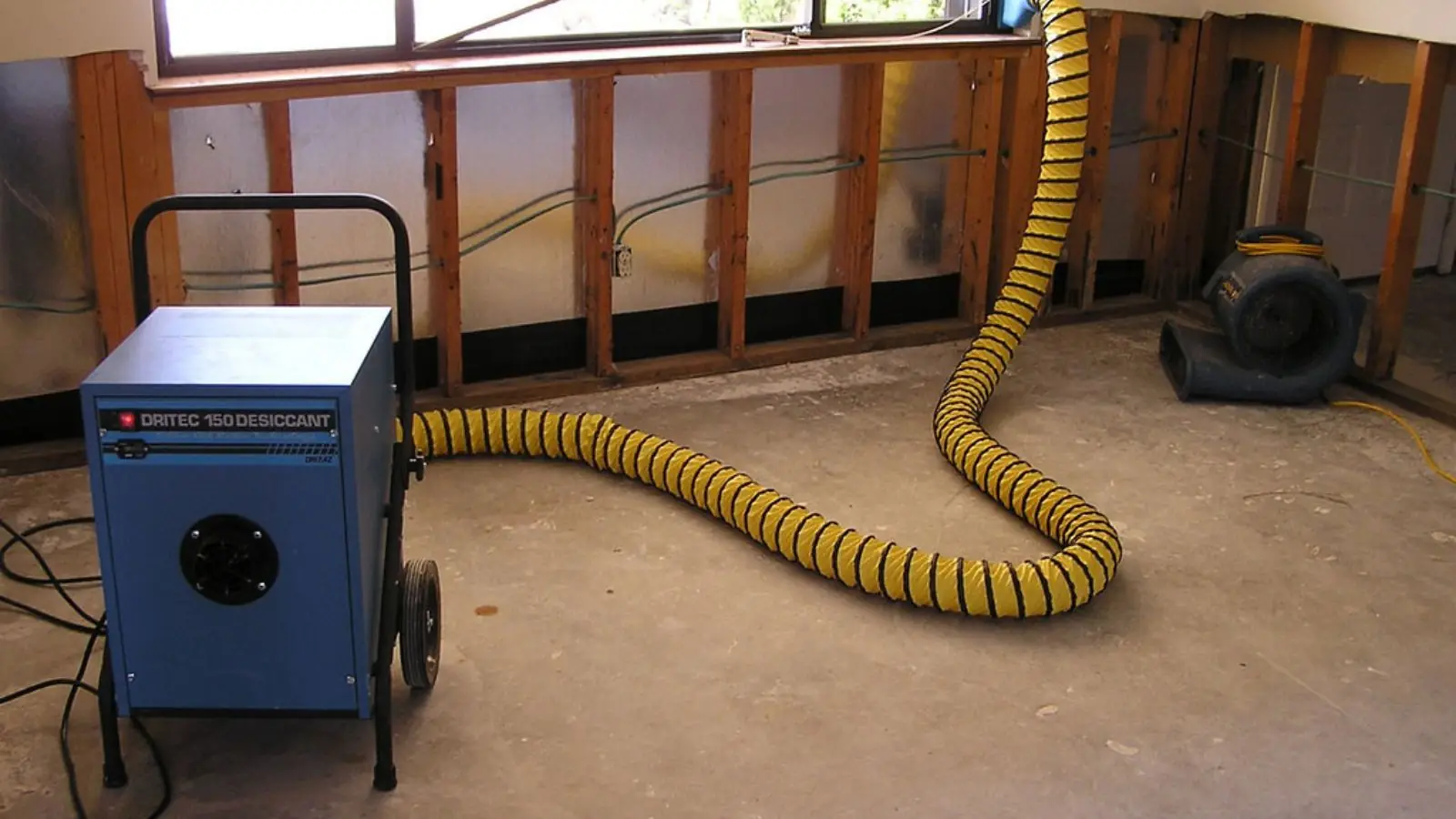
How long water damage takes to dry in West Hollywood, CA depends on the materials, the amount of water and how fast drying starts. Structural drying is the controlled removal of moisture from building materials using airflow, dehumidification and measurement until readings return to normal.
Callers often ask whether it will be three or four days, and whether they can rent air movers and dehumidifiers. Several days is common, but readings decide, not the calendar.
What each piece of equipment does
Air movers
Fans that push air across wet surfaces so moisture leaves the material and enters the air.
LGR dehumidifiers
Low grain refrigerant units that pull moisture out of the air in typical indoor conditions.
Desiccant dehumidifiers
Units that use a drying material and work well in cooler spaces and low humidity.
Drying mats
Mats that pull water up out of hardwood floors and certain subfloors.
Moisture meters
Instruments that read moisture in drywall, wood and other materials so the crew can track progress.
Why materials dry at different rates
| Material | Drying behavior | What the crew watches |
|---|---|---|
| Drywall | Often dries faster if wet only briefly | Moisture readings at several heights |
| Hardwood flooring | Slower, may cup or buckle as it dries | Surface and subfloor readings, floor movement |
| Plaster | Dense, can hold water for a long time | Readings through the thickness of the wall |
| Insulation | Holds water and often must be removed | Cavity moisture and odor |
| Carpet and pad | Pad usually holds water and is often replaced | Condition of the pad and subfloor |
These are patterns, not promises. Each job is read and recorded on its own.
How a crew knows the job is done
A crew compares readings in the affected area with an unaffected reference reading for the same material. Daily visits record temperature, humidity and moisture, and equipment is adjusted or moved as the readings change. The job ends when the readings match the dry standard, not on a set day.
Our water mitigation page describes this process, including the structural drying sections that follow extraction. If you were told a fixed number of days, ask what the readings are.
Wet floors or walls and no idea how long?
Call the 24/7 line. A crew can explain the equipment and begin readings when available.
Why speed still matters
The EPA advises drying water-damaged areas within 24 to 48 hours to prevent mold growth. It also suggests keeping indoor humidity below 60 percent, and ideally between 30 and 50 percent. Slow or incomplete drying leaves that window open.
A humidity meter is cheap and helps you track the room between visits. If readings stay high or a musty smell appears, tell the crew so they can look for hidden moisture.
Why a one-time equipment rental falls short
Equipment placement and monitoring matter as much as the machines. Too few units leave pockets of moisture, and too many without control can overdry and damage finishes. A crew sizes the setup to the room and measures daily, which a one-time rental does not do.
After drying, damaged finishes are rebuilt, covered on our water damage repair page. Properties just across the line in Beverly Hills follow the same process.
Common drying myths
One myth says that a floor that feels dry to the hand is dry. Surfaces can feel fine while the layer underneath still reads wet, which is why meters matter. Another says that more heat is always better, when too much heat can crack wood and dry the surface faster than the core.
A third myth says that opening every window speeds drying. It helps only when outdoor air is drier than indoor air, and the crew checks that before advising it. Following the readings keeps these myths from costing you a second repair.
Questions to ask about your drying plan
A good drying plan is specific. Ask how many air movers and dehumidifiers will run, how often the crew will return to take readings and what number counts as dry for each material. Ask what happens if a reading stalls.
- How many units will run, and where will they sit?
- How often will you take readings, and can I see the log?
- What is the dry reference for each material?
- What will you do if a wall or floor is slow to dry?
- Which materials do you expect to remove instead of dry?
Straight answers to these questions tell you whether the job is being managed by measurement or by guesswork. Keep the daily log, because it also documents the loss for your insurer and property manager.
What you can do between visits
Leave the equipment running and do not move it. Keep doors to the work area closed so the dehumidifiers work on the wet space and not the whole home. Avoid turning off breakers that feed the machines, and tell the crew if a unit trips.
If you notice a musty smell, a warm room or a floor that starts to lift, call the crew rather than waiting for the next visit. Small changes in the first days often point to something the readings need to catch.
Dry summers help, wet winters do not
NOAA 1991 to 2020 normals for the Westwood station at UCLA show very dry summer months, with 0.11 inches in June, 0.03 in July, 0.01 in August and 0.15 in September. February averages 4.73 inches. Dry outdoor air in summer can help drying, but equipment must still close the loop by removing moisture from the room.
In the wet months, opening windows can add humidity instead of removing it, so follow the crew's advice on ventilation. Check the outdoor conditions against the indoor reading before opening anything.
Sources: NOAA National Centers for Environmental Information 1991 to 2020 normals via UCLA and the National Weather Service Los Angeles/Oxnard, U.S. Environmental Protection Agency mold and moisture guidance
Common questions from West Hollywood readers
Can I just run a fan and a dehumidifier?
For a small, clean spill, maybe. For soaked walls, floors or insulation, readings and equipment placement matter, and the EPA suggests drying within 24 to 48 hours.
Why is my floor still wet after a few days?
Dense materials such as hardwood and plaster dry slowly. Ask for the readings, because the crew should be tracking them daily.
Is it loud and how long do machines run?
Air movers and dehumidifiers run continuously during drying. The crew sets them up and adjusts them at each visit, and the job ends when readings reach the dry standard.
Can drying happen in cold or humid weather?
Yes, because dehumidification works indoors. Outdoor conditions affect ventilation choices, so follow the crew's advice.
Does the dry West Hollywood summer speed up drying?
Summer outdoor air is very dry, which can help, but a crew still uses equipment to confirm every material has reached its dry reading.